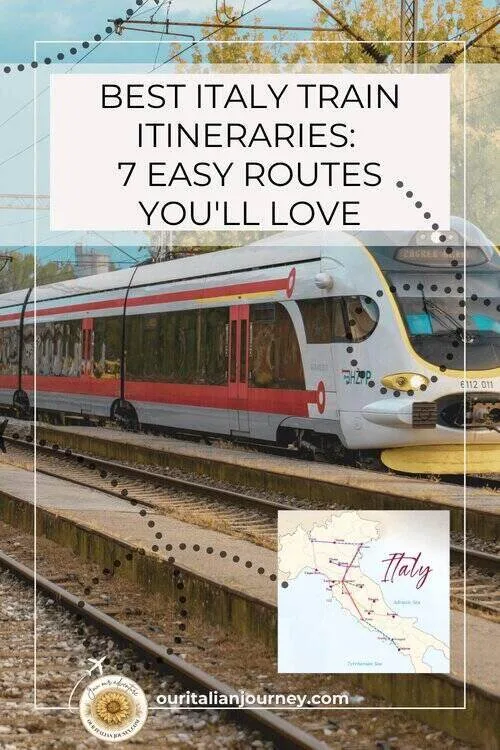
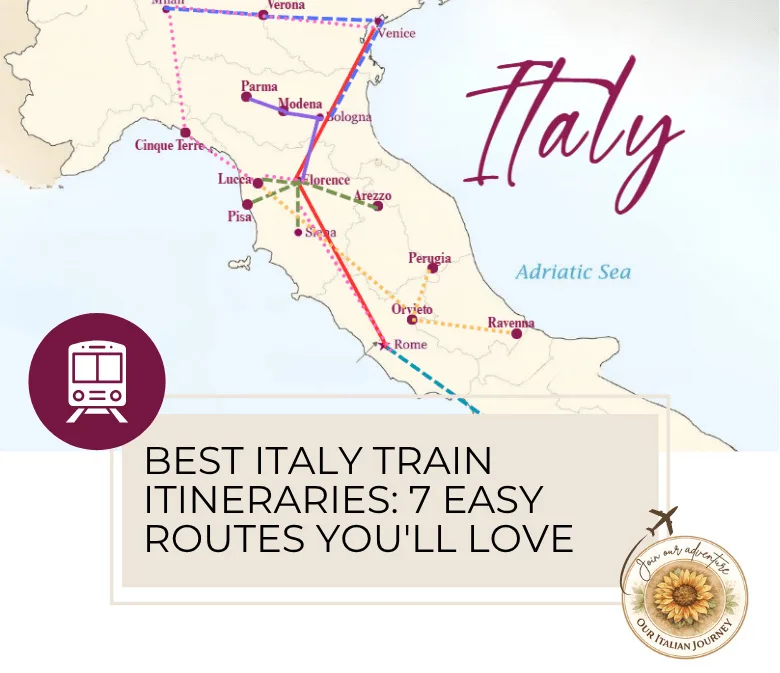
If you’ve ever dreamed of exploring Italy without driving, you’re in luck. The best Italy train itineraries make it easy to experience bustling cities, charming towns, and breathtaking scenery—all while leaving the navigation to someone else.
Italy has one of Europe’s best rail networks. High-speed trains connect major cities in just a few hours, while regional trains take you to smaller destinations that many travelers overlook. As a result, you can relax, enjoy the changing landscapes, and arrive in the heart of each town without worrying about traffic, toll roads, or parking.
This post contains affiliate links that help keep this website running. By purchasing through our links, we make a small commission at no extra charge to you. Thank you for your support!
Over the years, we’ve traveled throughout Italy by train countless times. While renting a car certainly has its place, many of our favorite trips have been by rail. Not only is train travel comfortable, but it also lets you enjoy the journey as much as the destination. Whether this is your first visit or your fifth, these seven itineraries will help you plan an unforgettable Italian adventure.
👉 Savings on accommodations from budget to luxury hotels
Why Choose Train Travel In Italy?
Italy’s rail system connects nearly every major destination, making it one of the easiest countries in Europe to explore.
Traveling by train also comes with several advantages:
- Stations are usually located in the center of town.
- You won’t need to worry about ZTL zones or parking.
- High-speed trains save hours of driving.
- You can admire vineyards, rolling hills, mountains, and coastlines from your seat.
- You’ll often spend less than you would on fuel, tolls, and parking.
If you’re planning your first Italian adventure, train travel removes much of the stress while letting you focus on enjoying the country.
Before You Begin Planning
Before choosing one of these itineraries, keep a few things in mind.
Italy has two main types of trains. High-speed trains connect larger cities quickly, while regional trains stop in smaller towns and villages. For longer journeys, booking tickets in advance often saves money. On the other hand, regional train tickets usually offer more flexibility.
We also recommend packing as lightly as possible. Since you’ll be carrying your own bags up steps, across platforms, and sometimes over cobblestone streets, lighter is definitely better.
If you’d like more details about buying tickets, understanding the different train types, and avoiding common mistakes, be sure to start with our post on train travel in Italy. Then use the search bar and type in “train” for tons more posts on the subject!
Italy Train Itinerary Comparison
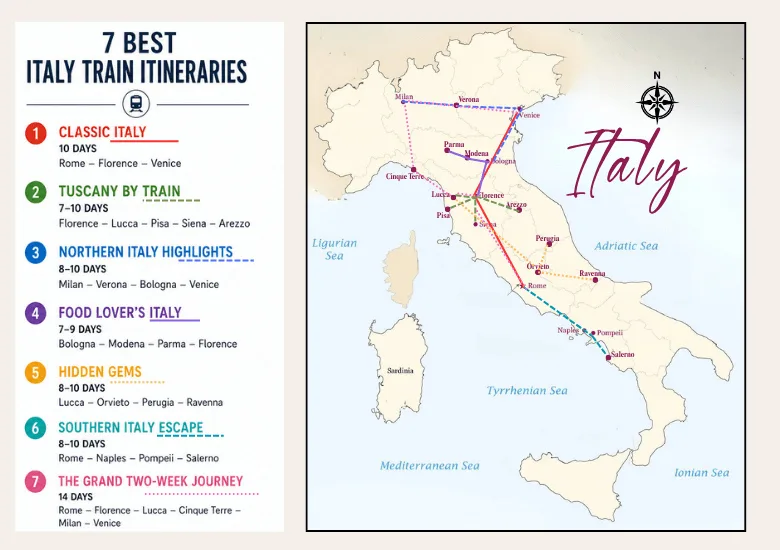
| Itinerary | Best For | Length | Car Needed? |
|---|---|---|---|
| Classic Italy | First-time visitors | 10 Days | No |
| Tuscany By Train | Slow travelers | 7–10 Days | No |
| Northern Italy Highlights | History and culture | 8–10 Days | No |
| Food Lover’s Journey | Foodies | 7–9 Days | No |
| Hidden Gems | Repeat visitors | 8–10 Days | No |
| Southern Italy Escape | Sun and history | 8–10 Days | No |
| Grand Two-Week Journey | Seeing it all | 14 Days | No |
Classic Italy: Rome, Florence And Venice
Best For: First-time visitors
Length: 10 days
Travel Pace: Moderate
Car Needed: No
If you’ve never been to Italy, this route is hard to beat. It combines three iconic destinations while keeping travel times manageable.
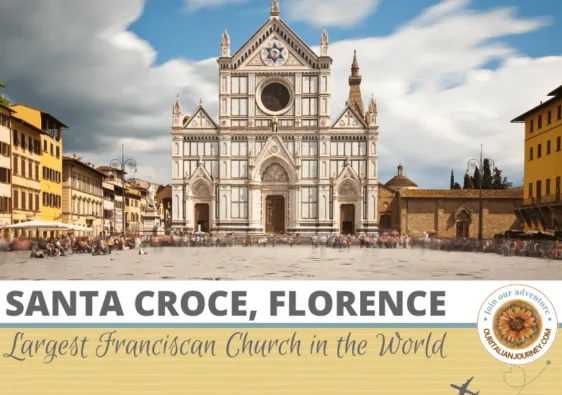
Spend three nights in Rome exploring ancient ruins, lively piazzas, and neighborhood trattorias. Then board a high-speed train to Florence, where Renaissance art, walkable streets, and Tuscan cuisine await. Finally, continue north to Venice, where canals replace roads, and every moment feels like a postcard.
Approximate train times:
- Rome to Florence: 1 hour 30 minutes
- Florence to Venice: 2 hours
Although this itinerary focuses on Italy’s most famous cities, you’ll quickly understand why they remain so popular.
Tuscany By Train: Slow Down And Savor The Region
Best For: Travelers who enjoy charming towns
Length: 7–10 days
Travel Pace: Relaxed
Car Needed: No
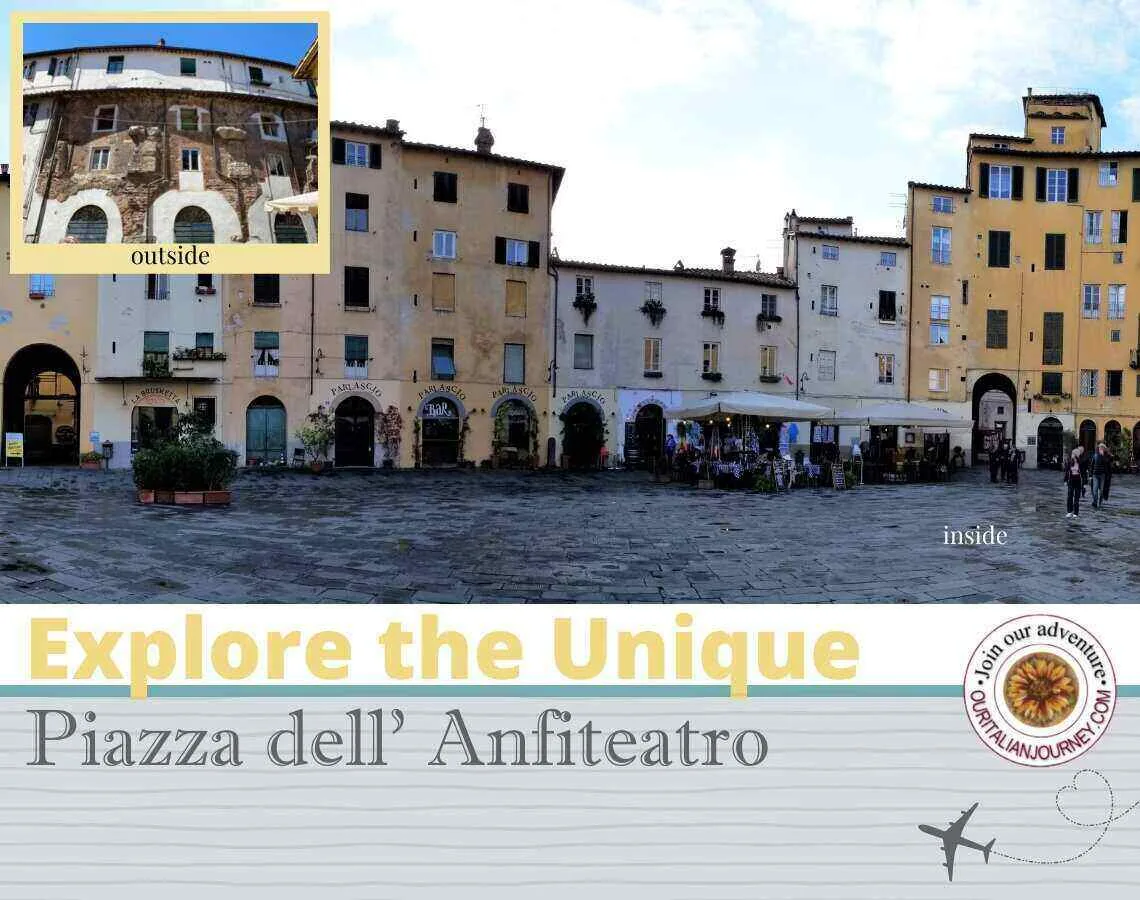
Many travelers believe you need a car to experience Tuscany. Fortunately, that’s not entirely true. Begin in Florence before heading west to Lucca, one of our favorite cities in Italy. (Yah, we live here.) Walk or bike along the Renaissance walls, wander through quiet streets, and enjoy relaxed evenings in beautiful piazzas.
From Lucca, it’s easy to visit Pisa for a day before continuing to Siena. If your schedule allows, finish your journey in Arezzo, a city rich in history but often overlooked by international visitors.
While you’ll miss a few tiny hill towns that require a car, this itinerary still showcases much of Tuscany’s beauty without ever getting behind the wheel.
Northern Italy Highlights
Best For: Art, history, and architecture lovers
Length: 8–10 days
Travel Pace: Moderate
Car Needed: No
Northern Italy offers an incredible variety of experiences within just a few hours of one another. Start in Milan before traveling to Verona, one of Italy’s most romantic cities. Spend time wandering through ancient streets, visiting Roman landmarks, and enjoying the lively piazzas before continuing to Bologna.
Bologna deserves more than just a quick stop. It’s one of Italy’s greatest food cities, yet it also boasts beautiful arcades, impressive towers, and fewer crowds than many larger destinations.
Finish your journey in Venice, where every canal, bridge, and quiet alley creates lasting memories.
Approximate train times:
- Milan to Verona: 1 hour 15 minutes
- Verona to Bologna: 50 minutes
- Bologna to Venice: 1 hour 30 minutes
Food Lover’s Italy: A Culinary Journey By Train
Best For: Food lovers and wine enthusiasts
Length: 7–9 days
Travel Pace: Relaxed
Car Needed: No
If your favorite travel memories revolve around incredible meals, this itinerary belongs at the top of your list. Every stop introduces a different regional specialty, giving you a true taste of Italy.
Begin in Bologna, often called Italy’s food capital. Join a food tour, browse local markets, and enjoy authentic tagliatelle al ragù, tortellini, and mortadella where they were born.
Next, take the short train ride to Modena. This elegant city is famous for traditional balsamic vinegar, and many nearby producers offer guided tastings. While you’re there, don’t miss the beautiful historic center, a UNESCO World Heritage Site that’s often overlooked by visitors rushing between larger cities.
Continue to Parma, where you’ll discover the home of Parmigiano Reggiano cheese and Prosciutto di Parma. Factory tours give you an appreciation for the time and craftsmanship behind these world-famous products.
Finish your journey in Florence. Although Florence is best known for its art and architecture, its food scene is equally impressive. Enjoy a traditional bistecca alla Fiorentina, browse the Mercato Centrale, or settle into a neighborhood trattoria for an unforgettable meal.
Approximate train times:
- Bologna to Modena: 25 minutes
- Modena to Parma: 30 minutes
- Parma to Florence: 2 hours
This itinerary proves that one of the best ways to experience Italy is one delicious bite at a time.

We have many other posts other than the ones we’ve highlighted. Just use the search bar!
Hidden Gems By Train
Best For: Second-time visitors and slow travelers
Length: 8–10 days
Travel Pace: Relaxed
Car Needed: No
Once you’ve seen Italy’s famous landmarks, it’s time to discover places that many travelers miss. Start in Lucca, one of Tuscany’s most charming cities. Walk or cycle along its tree-lined Renaissance walls, explore quiet streets, and linger in cafés where life moves at a slower pace.
From there, travel south to Orvieto. Perched high on volcanic rock, this hill town offers spectacular views, fascinating underground tunnels, and one of Italy’s most stunning cathedrals. Better yet, it’s incredibly easy to reach by train.
Continue to Perugia, the capital of Umbria. Medieval streets, panoramic viewpoints, chocolate shops, and lively piazzas make this city easy to love.
Finish your journey in Ravenna, where magnificent Byzantine mosaics decorate churches and monuments unlike anywhere else in Italy.
Approximate train times:
- Lucca to Orvieto: About 3½ hours
- Orvieto to Perugia: 1½ hours
- Perugia to Ravenna: About 3 hours
This itinerary rewards travelers who enjoy slowing down, wandering without an agenda, and experiencing a more authentic side of Italy.
Southern Italy Escape
Best For: History lovers and coastal scenery
Length: 8–10 days
Travel Pace: Moderate
Car Needed: No
Southern Italy combines ancient history with beautiful coastlines and unforgettable food. Begin in Rome before taking a high-speed train to Naples. Spend time exploring the city’s vibrant neighborhoods, historic churches, and incredible pizza.
Next, visit Pompeii, one of Italy’s most remarkable archaeological sites. Since trains run frequently between Naples and Pompeii, it’s an easy day trip.
Continue south to Salerno, a lively waterfront city that many visitors overlook. It also serves as an excellent base for exploring the Amalfi Coast by ferry during the warmer months.
If you have extra time, consider adding Sorrento to your itinerary before returning home.
Approximate train times:
- Rome to Naples: 1 hour 10 minutes
- Naples to Pompeii: 40 minutes
- Naples to Salerno: 40 minutes
This itinerary blends history, culture, and stunning coastal scenery into one memorable vacation.
The Grand Two-Week Journey
Best For: Travelers wanting a little bit of everything
Length: 14 days
Travel Pace: Moderate
Car Needed: No
If you’re fortunate enough to have two weeks in Italy, this itinerary showcases many of the country’s highlights while keeping travel days reasonable.
Suggested route:
- Rome – 3 nights
- Florence – 2 nights
- Lucca – 2 nights
- Cinque Terre – 2 nights
- Milan – 2 nights
- Venice – 3 nights
This route combines famous destinations with a few quieter favorites. You’ll experience ancient history, Renaissance masterpieces, colorful seaside villages, vibrant cities, and some of Italy’s best food—all without renting a car.
Although you’ll spend more time on trains than with some of the shorter itineraries, every journey is comfortable and gives you another chance to admire Italy’s beautiful landscapes.
Helpful Tips For Planning Your Italy Train Trip
Frequently Asked Questions
Is Italy easy to travel by train? Yes. Italy has one of Europe’s best rail systems, making it easy to travel between major cities and many smaller towns without renting a car.
Should I buy a rail pass? It depends on your itinerary. If you’re taking several long-distance trips, a rail pass may save money. However, travelers with a fixed schedule often find that purchasing individual tickets in advance costs less.
Can I visit Tuscany without renting a car? Absolutely. Cities such as Florence, Lucca, Pisa, Siena, and Arezzo are all accessible by train. While a few small hill towns require a bus or rental car, you can still experience much of Tuscany using public transportation.
How much luggage should I bring? Less is almost always better. Since you’ll be lifting your own luggage onto trains and walking through stations, packing light makes your journey much easier.
Which Italy train itinerary is best for first-time visitors? The Classic Italy itinerary—Rome, Florence, and Venice—is still the best introduction to Italy. It combines history, art, culture, and excellent transportation connections.
Final Thoughts on the Best Italy Train Itineraries
Traveling by train is one of the easiest and most enjoyable ways to explore Italy. Instead of concentrating on traffic, parking, or unfamiliar roads, you can simply settle into your seat and watch vineyards, mountains, medieval villages, and olive groves pass by your window. I wrote about this in both our memoirs of how amazing and relaxing these train trips can be.
Whether you’re planning your very first visit or returning to discover somewhere new, these Italy train itineraries offer something for every traveler. Choose the route that matches your interests, travel at a comfortable pace, and leave room for unexpected discoveries along the way. After all, some of the best moments in Italy happen when you step off the train and begin exploring a place you hadn’t planned to fall in love with.