
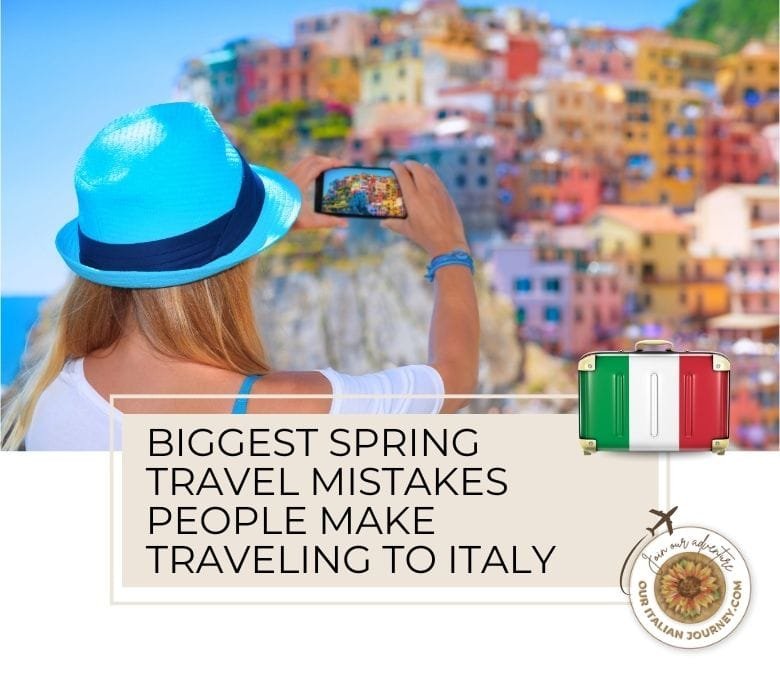
Biggest Spring Travel Mistakes People Make traveling to Italy usually starts with good intentions. People want to see it all while the weather is mild and the crowds feel manageable. Spring seems like the perfect compromise between quiet and busy. And in many ways, it is. But spring has its own rhythm, and trips fall apart when travelers try to force a summer-style itinerary onto a season that doesn’t work that way.
Spring in Italy rewards patience.
It favors flexibility over rigid plans and depth over distance.
When travelers understand that, spring becomes one of the most enjoyable times to visit.
This post contains affiliate links that help keep this website running. By purchasing through our links, we make a small commission at no extra charge to you. Thank you for your support!
Packing Like It’s Already Summer
Spring packing mistakes happen fast. Travelers see a warm forecast and assume the whole trip will feel that way. One sunny afternoon turns into a suitcase full of light clothes and little else.
In reality, spring weather changes daily. Mornings are cool. Evenings can be cold. Wind and rain show up without warning. Packing layers isn’t overthinking—it’s basic spring survival in Italy. A light jacket, a sweater, and comfortable closed shoes make the difference between enjoying long days out and cutting them short.
Assuming Warm Days Mean Warm Nights
Italy cools down quickly after sunset, especially outside major cities or in hill towns. That relaxed aperitivo you see in photos still happens in spring, but it’s rarely warm enough to sit outside in light clothing once the sun goes down.
Travelers who plan for cooler nights stay out longer and enjoy evenings more. Those who don’t often head back early, missing one of the best parts of Italian daily life.
Wearing the Wrong Shoes for Spring Travel
Spring in Italy means walking. A lot of it. Cobblestones, hills, uneven sidewalks, and long days on your feet are all part of the experience. Add spring rain, and the wrong shoes quickly become a problem.
This isn’t the season for new shoes or thin soles. Comfortable, broken-in walking shoes are essential. When your feet are happy, everything else feels easier. When they aren’t, even the most beautiful place loses its charm.
Thinking Spring Means No Crowds
Spring is no longer a quiet secret. April brings Easter travel, school holidays, cruise traffic, and long weekends. While it’s calmer than summer, popular cities and attractions still fill up quickly.
Many travelers assume they can book museums, trains, or major sights last-minute because it’s “only spring.” That assumption leads to sold-out tickets, long lines, or higher prices. Spring travel still requires planning—just with a lighter touch than peak season.
Overlooking Holidays and Schedule Changes
Spring includes some of Italy’s most important holidays, and they affect daily life more than visitors expect. Shops may close or shorten hours. Transportation schedules can change. Restaurants may be booked solid or not open at all.
Checking holiday dates (our post on 2026 dates) before finalizing your plans helps you move through spring travel more smoothly, especially in smaller towns where options are limited.
Not Planning for Spring Rain
Rain is part of spring travel in Italy. It doesn’t usually last all day, but it can disrupt outdoor plans if you don’t allow for it.
Travelers who build flexible days into their itinerary handle rain with far less stress. Museums, churches, long lunches, and wandering covered streets all fit naturally into spring travel when plans aren’t overly packed.
Trying to Do Too Much in One Trip

This is one of my pet peeves. Did Gary and I once do this? The answer is yes. But we have learned the hard way and are always trying to convey this to other travelers. This is the mistake that causes the most frustration—and the most regret. Spring makes travelers optimistic. They add more cities, more day trips, more early mornings, and more train changes because everything feels doable.
In reality, this approach turns Italy into a race. Travelers spend more time checking train schedules than enjoying where they are. Meals become rushed. Luggage gets dragged through stations again and again. One delay or weather change throws off the entire plan.
Spring is not meant for fast travel. It’s meant for settling in, even briefly. Staying an extra night in one place often gives you more than adding another destination. It allows time for slower mornings, unplanned walks, and meals that aren’t squeezed between trains.
The travelers who enjoy Italy the most in spring aren’t the ones who saw the most places. They’re the ones who remember how a place felt. A quiet piazza in the morning. A lunch that turned into coffee. A day that didn’t need to be perfectly planned.
Final Thoughts on Spring Travel in Italy
Spring in Italy works best when you slow down. Pack for change. Plan ahead where it matters. Choose fewer places and experience them more fully. When you travel this way, spring doesn’t feel rushed or unpredictable. It feels natural. And that’s when Italy really shines.





Spring brings optimism with flowers blooming and the scents of growth. Your advice is well said – especially planning for significantly more rain (or the occasional late snow up North). A good raincoat and hood (no umbrella – makes it hard to get through narrow alleys in a lot of cities, least of all Venice or San Gimignano) make for a much easier day of exploring.
I so angree, Angelo! Thanks for commenting and supporting our journey. We appreciate it very much!!