

Pappa al pomodoro is one of those dishes that is memorable. At its core, it’s a Tuscan bread soup made from just a few ingredients: stale bread, ripe tomatoes, garlic, olive oil, basil, and broth or water. That’s it. No fancy tricks. The magic is in how it transforms from something so simple into something rich, comforting, and deeply satisfying.
The dish comes from rural Tuscany, especially the Tuscan countryside and cities such as Florence. It was born out of necessity, not luxury. Farmers and household cooks didn’t waste food. Instead of throwing it away, they softened it with tomatoes and broth, turning it into a meal that could feed a family.
Pappa al Pomodoro is Incredible
That idea of “use what you have” is still the heart of pappa al pomodoro today.
The name itself is very literal. “Pappa” means mush or baby food texture in Italian, and “pomodoro” means tomato. So you’re basically looking at “tomato mush with bread.” Not glamorous on paper, but in reality, it’s one of the most comforting dishes in Italy.
Tomatoes came into the recipe later, after they arrived in Europe from the Americas. Once they became part of Italian cooking, they changed everything. In summer, especially in central Italy, ripe tomatoes would be cooked down with garlic and olive oil, then soaked into bread until everything melted together into a thick, almost creamy soup.
You’ll Want to Make This!
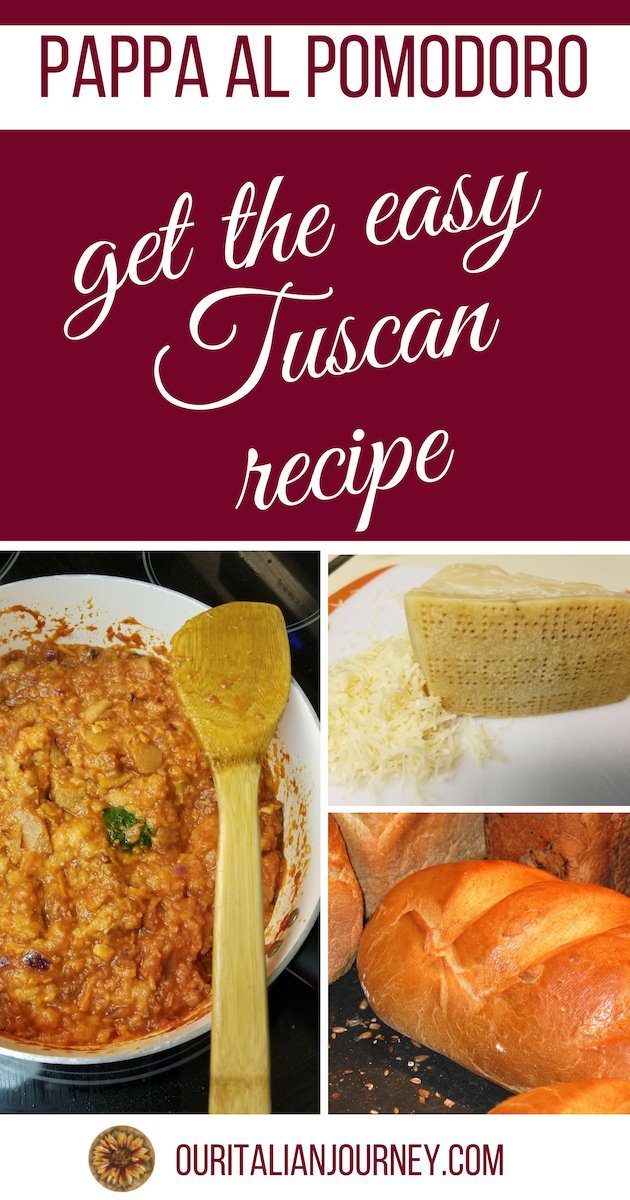
What makes it so special is the texture. It shouldn’t be smooth like a purée. It should be thick, rustic, and almost spoon-standing. The bread breaks down just enough to bind everything, but you still get little bits of structure. You’ll often find it served warm, but not hot enough to burn. Then it’s finished with a drizzle of good Tuscan olive oil and fresh basil on top.
In Tuscany, it’s often tied to summer and late summer harvests, when tomatoes are at their peak. It’s also one of those dishes that shows up in home kitchens more than in restaurants. It’s everyday food, not show-off food. And honestly, once you’ve had a proper bowl in a small Tuscan kitchen, it’s hard to forget.

Pappa al Pomodoro – A Tuscan Bread & Tomato Soup
Course: Food, Recipes4
servings30
minutes40
minutesI keep a ziplock bag of all my Parmesan rinds to use when making many recipes such as this and even pasta sauce! Just remember when using Parmigiano rind, make sure you don’t add too much extra salt as the cheese has plenty in it already!
Ingredients
2 tablespoons olive oil
4 ounces pancetta diced
1 small red onion chopped
1 carrot grated
3 cloves garlic diced
1/4 teaspoon red pepper flakes
1/2 teaspoon kosher salt
(2) 14-ounce cans of finely chopped or crushed tomatoes such as Cento
2 cups low-sodium chicken or vegetable broth plus up to 2 cups more
4 cups stale bread cubes cut into 1-inch cubes. I use an Italian-type loaf of bread.
4 + sprigs of basil
A few pieces of Parmesan rind
1 cup freshly grated Parmesan
Directions
- In a medium Dutch oven over medium-high heat add the olive oil and pancetta. When the pancetta is well-done, remove it and drain it on paper towels. I make extra as I like to save some separately to sprinkle on the top when serving.
- In the same pan, add the red onion, carrot, garlic, and red pepper flakes to the pot. Reduce the heat to medium and cook, stirring often, for about 1-2 minutes.
- Add the salt, canned tomatoes, chicken (or vegetable) broth, and bread cubes; stir to combine. Add the Parmesan rind and a few sprigs of basil.
- Bring to a simmer, then reduce the heat to maintain a gentle bubble. Continue to cook and after about 5 minutes, add in the pancetta.
- Cook for 25 minutes, stirring often to break apart the bread and prevent anything from sticking to the bottom of the pan. I really like to break up the bread, so it’s not so chunky. The photo in this post is chunkier than I’d like. If the soup gets too thick, add extra broth as needed. There are times when I have added up to 2.5 cups of additional broth because I didn’t measure out the bread. It is supposed to be a thick, hearty soup, so don’t expect it to be thin.
- Right before serving, add the grated Parmesan cheese sprinkled on top. Add also the extra pancetta, a drizzle of extra-virgin olive oil, and some chopped fresh basil.




Love the idea of extra pancetta on top!
Oh yes… and why not? (giggles)