
Our best Italy advice starts here—with the real questions you send us. After years of traveling through Italy, writing about it, and meeting so many of you in person, Gary and I have noticed the same questions coming up again and again. So we’ve pulled together our favorite, the practical, the surprising, and the ones that make us smile every time, and answered them honestly. Pour a glass of something Italian and read on.
This post contains affiliate links that help keep this website running. By purchasing through our links, we make a small commission at no extra charge to you. Thank you for your support!
👉 Save on Budget to Luxury Accommodations
Before You Go
1. When is the best time to visit Italy? Shoulder seasons are our answer every time. April through May and September through October offer wonderful weather, thinner crowds, and prices that won’t make you wince. Summer is beautiful but busy. Winter, especially in the cities, is genuinely underrated and far more atmospheric than most people expect.
2. How far in advance should I book? For popular sites such as the Colosseum, the Vatican Museums, the Uffizi, and the Cinque Terre trails, you need to book as early as possible, especially for spring and summer travel. Restaurants in smaller towns are generally more relaxed, but if you can, a reservation is always a good idea.
3. Do I need travel insurance? Difficult to answer, but for most people, yes. Trip cancellations and lost luggage are all real possibilities. You’d probably be surprised if you had an accident (twisted ankle) type of injury. Emergency room services are very reasonable for most things we know of.
4. Should I exchange money before I leave home? A small amount of euros for your first day is sensible for such things as a taxi or a coffee. Beyond that, ATMs in Italy generally offer better rates than airport exchange booths. Just notify your bank before you travel. And remember: when using an ATM, always decline the option to set the exchange rate.
5. What should I pack that I’ll actually use? Comfortable walking shoes are the single most important thing in your bag. Beyond that: layers, a light scarf for church visits, a small day bag, a reusable water bottle, and a power adapter. Leave room for what you’ll bring home. We have tons of posts on this subject and packing lists for each season. See below.
Getting Around
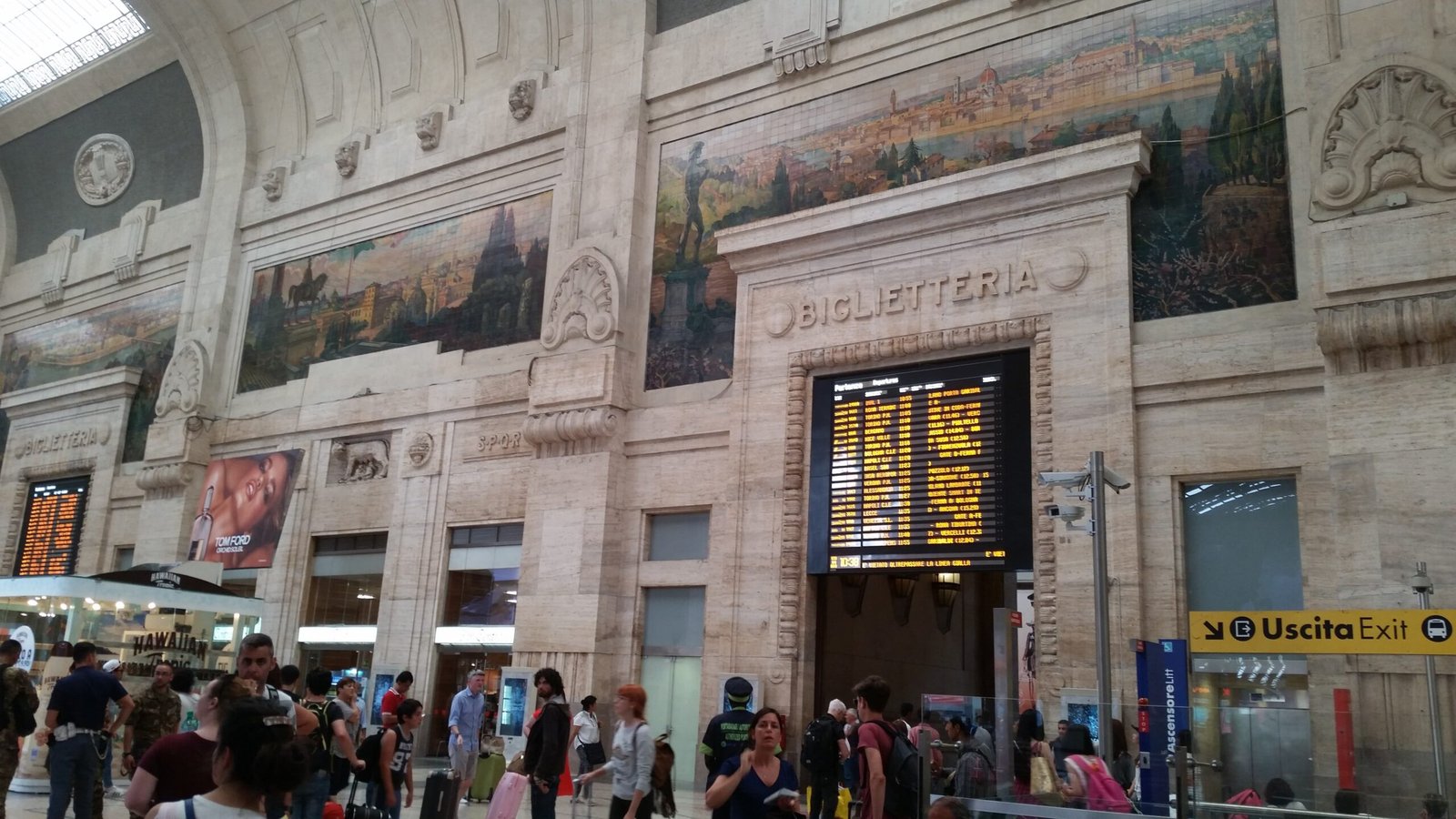
6. Is Italy easy to navigate by train? Remarkably so. Italy’s rail network connects major cities efficiently and affordably. Trenitalia and Italo both run high-speed routes. For smaller towns, regional trains fill in the gaps beautifully — just build in a little extra time.
7. Should I rent a car? It depends entirely on where you’re going. For rural Tuscany, Umbria, or the Amalfi Coast, a car opens up a completely different Italy. For city-to-city travel, skip it. Parking is stressful, ZTL zones are everywhere, and the trains are better anyway.
8. What on earth is a ZTL zone? ZTL stands for Zona a Traffico Limitato, a restricted traffic zone in historic city centers. Drive into one without a permit, and a fine will find you weeks later by mail. Your GPS won’t always catch them. Always ask your hotel before driving anywhere near a historic center.
9. Are taxis easy to find? In cities, yes. Your hotel can call one, or you can use the itTaxi app. Uber operates in limited capacity in a few larger Italian cities (Rome and Milan), but traditional taxis remain far more reliable across the country.
10. How do I validate my train ticket? On regional trains, you must stamp your ticket in the small yellow or green machines on the platform before boarding. Failure to do so can result in a fine, even with a valid ticket. High-speed train tickets with assigned seats are already validated electronically. Again, we have a bunch of posts about trains. Just search “train travel” in the search bar.
Our Best Italy Advice on Food and Drink
11. When do Italians actually eat? Later than you might expect. Lunch runs roughly 1:00–3:00 PM and dinner rarely begins before 7:30 PM, often later in the south. Arrive at 6:00 PM and you may find yourself alone in the restaurant — which, admittedly, has its own quiet charm.
12. Is ordering a cappuccino after dinner really a problem? Italians consider milk-based coffees a morning ritual. After dinner, the done thing is an espresso or perhaps a digestivo like limoncello or amaro. But our best Italy advice? No one will ask you to leave for ordering a cappuccino, but you will receive a very particular look (giggles).

13. Do I need to tip in Italy? Tipping is not expected the way it is in the States. Most sit-down restaurants include a coperto — a small cover charge which covers bread and the table. If the service genuinely moved you, rounding up or leaving a few euros is a lovely gesture. It is never obligatory.
14. What is the difference between a ristorante, trattoria, and osteria? Traditionally, a ristorante is more formal, a trattoria is family-run and casual, and an osteria was originally a wine-focused spot with simple food. Today the lines blur considerably, but generally speaking, the less fancy the décor, the more authentic the cooking.
15. Can I drink the tap water? Our best Italy advice is – Yes, throughout almost all of Italy. Even better, the stone drinking fountains (fontanelle) found in town squares and along streets offer free, clean, cold water. Fill your bottle freely and often.
16. What is the one food mistake tourists make most? Eating directly adjacent to major tourist sites. The closer you are to the Trevi Fountain or the Ponte Vecchio, the more you are paying for the view rather than the food. Walk two streets away, and the quality and the price change immediately. But a good friend reminded me and commented on a recent post about this subject, that sometimes you just want the ambiance and are willing to pay a bit more for it. I so agree!
Culture & Etiquette
17. What should I wear to visit churches? Shoulders and knees must be covered. Many churches provide wraps or paper coverings at the entrance, but coming prepared is both easier and more respectful. Our best Italy advice is an easy, fashionable fix. A light scarf tucked into your day bag solves this entirely.
18. Is Italy safe for solo travelers? Very much so, including for solo women. As with any popular tourist destination, awareness of your surroundings is sensible — particularly in crowded areas where pickpockets operate. Overall, however, Italy is one of the most welcoming countries in the world for independent travel.
19. Do I need to speak Italian? Not fluently, but a handful of phrases will open doors and warm hearts. Per favore, grazie, mi scusi, and posso avere il conto, per favore (may I have the bill, please) will serve you well. Italians genuinely appreciate the effort, however imperfect.
20. Why do some places close in the afternoon? The riposo—Italy’s version of a midday break—is still observed in many smaller towns, typically between 1:00 and 4:00 PM. It is not laziness; it’s lunchtime, more than likely with family and especially children home from school. Plan your shopping and sightseeing accordingly.

Money & Practicalities
21. Cash or cards — which does Italy prefer? Increasingly, cards are accepted everywhere. That said, smaller towns, markets, and family-run trattorias often still prefer cash. Carrying a mix of both means you will never find yourself stuck.
22. Are there hidden costs I should know about? A few worth knowing. The coperto at restaurants, museum booking fees on top of entry prices, and toll roads if you’re driving are the most common surprises. Additionally, some churches charge a small fee to enter specific chapels or view particular artworks.
23. Is Wi-Fi reliable in Italy? Generally yes in hotels, bars, and cafés. For more consistent connectivity, consider purchasing a local SIM card or an international data plan through your home provider. Having offline maps downloaded before you arrive is always a wise backup.
24. What converter plug do I need for Italy? Italy uses Type F plugs — two round pins — with a standard voltage of 230V and frequency of 50Hz. If you’re traveling from the States, you’ll need both a plug adapter and a voltage converter for older devices. Most modern electronics, like laptops, phones, and cameras, are dual-voltage — check the label for “100–240V,” and you’ll only need the adapter. We recommend picking up a universal travel adapter before you leave home rather than hunting for one on arrival. We have some of our favs on the Main Menu > Store > Favorite Travel Tools.
Our Best Italy Advice Questions We Like The Best
25. What do most tourists miss entirely? The ordinary moments. The morning coffee standing at a bar counter. The nonna hanging laundry from a second-floor window. The unmarked chapel with a single extraordinary fresco. Italy rewards those who slow down and look up as much as straight ahead.
26. Which region should I visit first? There is no wrong answer, but Tuscany and Umbria offer a wonderful introduction — recognizable enough to feel accessible, rich enough to keep surprising you. Once you’ve fallen in love there, the rest of Italy opens up in the most irresistible way.
27. What surprises first-time visitors most? How regional it all is. The food, the dialect, the architecture, the pace of life — everything shifts as you move from north to south or coast to interior. Italy is not one country so much as twenty remarkable ones sharing a border.
Our Best Italy Advice Conclusion
Italy has a way of inspiring questions before you go and stories the moment you return. We love being part of that journey with you — honestly, answering these questions is one of our favorite parts of what we do. Every single one reminds us why Italy keeps pulling people back, trip after trip. If something came up that we didn’t cover here, drop it in the comments below. We read every one and we’re always happy to help. After all, no question about Italy is ever a bad one.







Another excellent post Ilene. We are usually constrained by the school schedules, but we managed a trip last October to Assisi, Orvieto and Florence and it was wonderful. The drive through the fall colors between Spello and Montefalco was beautiful.
A couple of packing tips: Compression cubes allow you to pack more efficiently, just make certain that you don’t exceed the luggage weight limits. Be sure to check carry-on weight limits, most are 10 kilos or 23 pounds. However, we had to check our carry-ons on Swiss Airlines because their carry-on weight limit is 18 pounds and ours were 21. Be sure to bring a small luggage scale with you for the trip home in case you have to rearrange things between bags. Another tip is to bring a collapsable duffel. We have a couple that fold up to about 8x8x2 inches. We have a lot of grandchildren and usually end up bringing more home than we left with and checking the duffel allows you to do it.
Excellent additional thoughts, Dennis. Appreciate it. Funny, I like the compression cubes because then I can take them out and put them directly in a hotel drawer without putting my garments directly on the dresser. Probably weird, I know, but I like to keep them in the bag. Gary doesn’t like them for some reason. How many grandchildren do you have? We have 10!
We have 16 so far.