
Slow Travel & Hidden Gems in Italy
Italy is a country that rewards those who take their time. Beyond the iconic landmarks and crowded tourist spots lies a quieter, more authentic side of the country. It is found in tiny villages, local markets, winding back roads, and long lunches that stretch into the late afternoon.
Some of our favorite moments in Italy have happened when we stopped trying to see everything. We have found ourselves lingering in a small piazza with a cappuccino, chatting with a local shop owner, or pulling the car over because a hilltop village looked too pretty not to explore. Those unplanned moments often become the ones we remember most.
That is the beauty of slow travel in Italy.
It is not about checking places off a list. It is about experiencing a place deeply, noticing the details, and leaving room for surprise.
This post contains affiliate links that help keep this website running. By purchasing through our links, we make a small commission at no extra charge to you. Thank you for your support!
The Essence of Slow Travel
To me, slow travel is about connection rather than consumption. It is the opposite of rushing from one attraction to another. Instead, it invites travelers to immerse themselves in a place through its people, traditions, food, and landscapes.
In Italy, slow travel might mean spending a week in one village, taking a cooking class, exploring the countryside by bicycle, or visiting the same cafe each morning until the owner knows your order.
It is about noticing the little things: the smell of fresh bread coming from a bakery, the sound of church bells through narrow streets, or the beautiful, soft golden light over a vineyard at sunset. These are the moments that stay with you.
How to Slow Travel in Italy
If you want to experience Italy at a slower pace, here are a few simple ways to do it:
- Stay at least three nights in each destination
- Choose fewer places and spend more time in each one
- Take regional trains instead of always using high-speed trains
- Stay in agriturismos, family-run hotels, or restored farmhouses
- Shop at local markets and small stores
- Walk whenever possible
- Leave space in your itinerary for unplanned stops
- Learn a few simple Italian phrases
- Eat where the locals eat
Italy is one of the easiest places in the world to slow down. The lifestyle and culture, to me, almost encourage it.
DISCLAIMER: Many of these hidden gems we have not yet visited ourselves. While researching this post, they truly sounded amazing AND we are adding them to our list of places to visit.
Hidden Gems of Northern Italy
Lake Orta, Piedmont
Tucked away in the Piedmont region, Lake Orta is often overlooked in favor of Lake Como. Yet that is exactly what makes it so special. It is quieter, more relaxed, and perfect for travelers who want lake views without the crowds. That’s what my research says.
The medieval village of Orta San Giulio sits gracefully on the lake’s edge, with cobblestone lanes, pastel-colored houses, and a lovely piazza overlooking the water.
A short boat ride takes visitors to Isola San Giulio, a tiny island with a monastery. There is a peaceful walking path known as the “Way of Silence.” Around the lake, travelers can enjoy local dishes like perch risotto, lake fish, and tapulone, a slow-cooked meat dish that is popular in the area.
Best time to visit: Spring and early fall are especially beautiful.
Val di Funes, South Tyrol
In the heart of the Dolomites, Val di Funes is a valley of incredible beauty. Jagged mountain peaks rise above green meadows, tiny churches, and wooden chalets.
This is a place where slowing down comes naturally. Travelers can spend their days hiking through alpine trails, stopping at mountain huts, and enjoying local dishes like speck, dumplings, and apple strudel.
The small Church of St. Magdalena is one of the most photographed spots in northern Italy, but seeing it in person feels even more magical.
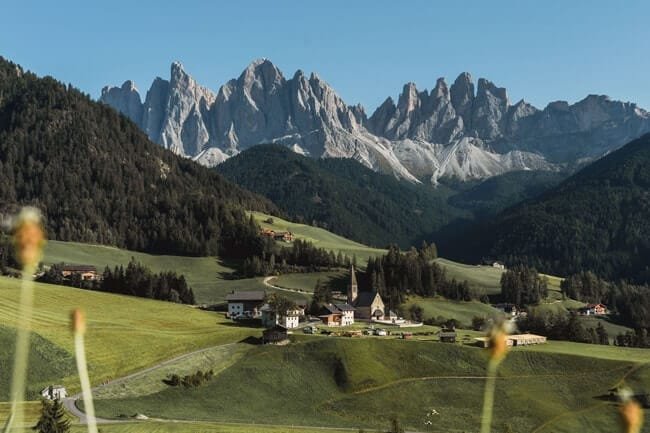
Best time to visit: September offers cooler temperatures, golden light, and fewer crowds.
Chiavenna, Lombardy
Near the Swiss border, Chiavenna is a charming alpine town filled with stone buildings, quiet lanes, and local traditions. One of its most unique features is its crotti, natural stone cellars used as rustic restaurants. Here, locals gather for cured meats, cheese, homemade wine, and simple mountain dishes.
The historic center is perfect for wandering. Nearby, the Acquafraggia waterfalls offer a refreshing break on warm days. Another idea I found, an easy day trip would be to the villages of the Valchiavenna area or a scenic drive toward the Swiss border.
Best time to visit: Late spring through early fall.
Hidden Gems of Central Italy
Civita di Bagnoregio, Lazio
Perched on a volcanic rock hilltop, Civita di Bagnoregio feels like stepping back in time. Reached only by a pedestrian bridge, it is one of Italy’s most memorable villages.
Stone houses, flower-filled corners, and tiny lanes create a quiet and romantic atmosphere. During the day, visitors can wander through artisan shops or enjoy a glass of wine overlooking the valley. Our friends Tom and Carla just visited here, and I have to say I’m a bit jealous. Once again… on the top of our list.
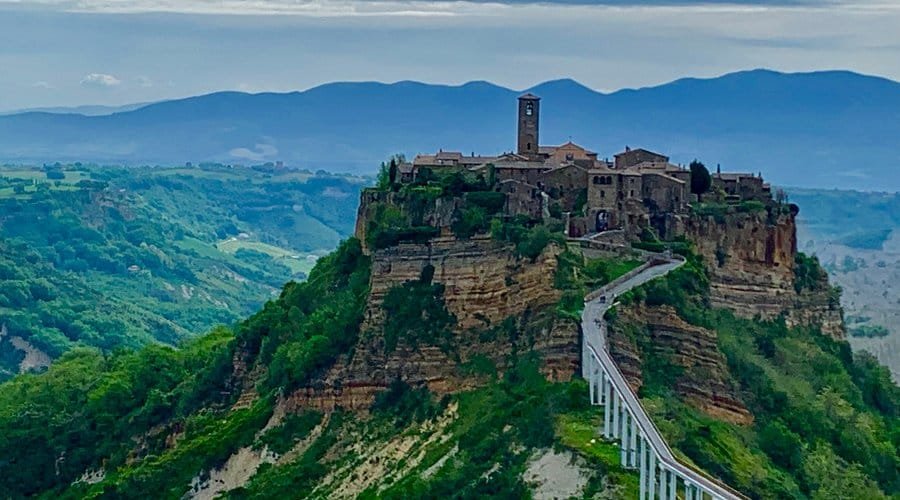
As with every small town in Italy, the real magic happens after the day-trippers leave. If you stay overnight, you can experience the silence, the sunset, and the star-filled sky.
Best time to visit: Spring and fall.
Le Marche Region
Between the mountains and the sea, Le Marche is one of Italy’s most overlooked regions. In fact, it has eluded us for years. It offers rolling hills, medieval towns, beautiful beaches, and wonderful food without the crowds found in nearby Tuscany. Visitors can explore Urbino, visit hilltop villages like Corinaldo and Offida, or spend time along the Conero Riviera with its hidden coves and clear water.
Food lovers will find plenty to enjoy here, from vincisgrassi and stuffed fried olives to Verdicchio wine.
Best time to visit: May, June, and September.
Umbria’s Green Heart
Often overshadowed by Tuscany, Umbria offers a quieter and more relaxed experience. Known as Italy’s green heart, the region is filled with vineyards, olive groves, hill towns, and peaceful countryside roads.
Staying in an agriturismo is one of the best ways to experience Umbria. Guests can enjoy homemade olive oil, local wine, and truffles.
Best time to visit: Spring and fall.
Travel Guidebooks
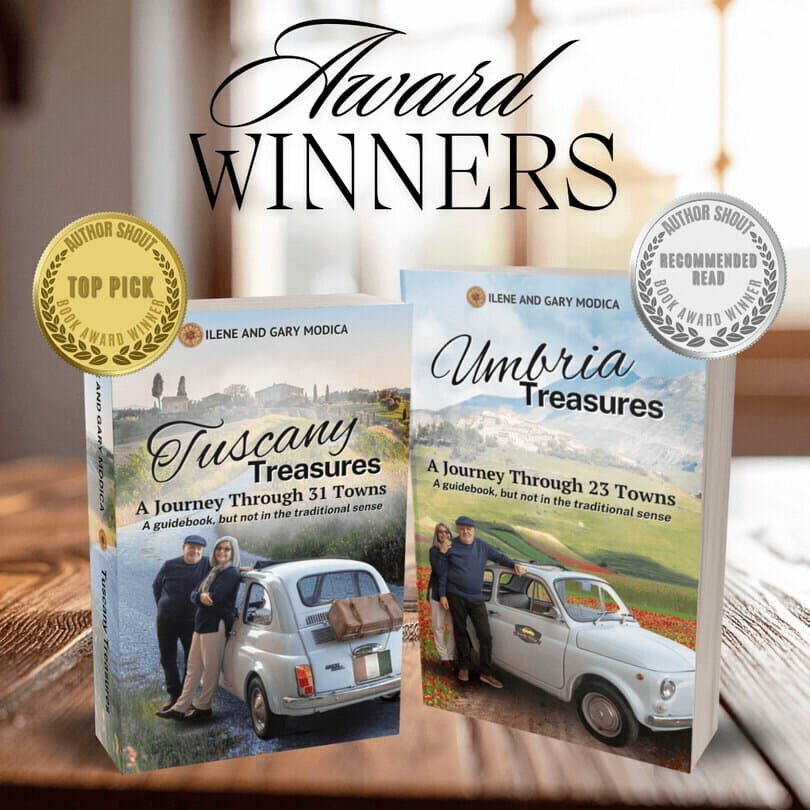
These are not your typical guidebooks. We include festivals for each town, several personal stories, sites to see, and tons more information!
Garfagnana, Tuscany
For travelers who want to experience Tuscany without the heavy crowds, Garfagnana is one of the region’s best hidden gems. Located between Lucca and the mountains, this area is filled with forests, small villages, local markets, and scenic roads.
Visitors can explore towns like Castelnuovo di Garfagnana, hike in the Apuan Alps, or visit tiny villages where time seems to stand still. Local foods include farro soup, and chestnut-based dishes.
Best time to visit: Late spring through early fall.
Hidden Gems of Southern Italy
Matera, Basilicata
Few places in Italy are as unforgettable as Matera. Its ancient cave dwellings, known as the Sassi, are carved into limestone cliffs and have been inhabited for thousands of years. Walking through Matera feels like stepping into another world. Stone stairways, hidden courtyards, and cave churches create an atmosphere unlike anywhere else in Italy.
Many of the caves have been transformed into hotels, restaurants, and art spaces. Gary and I stayed in a hotel/cave for two nights exploring this town in 2019. It’s a bit off the beaten path- but please–don’t miss it! It’s worth your time. Truly!
Known as the Sassi, these ancient cave dwellings are carved into limestone cliffs and have been inhabited for thousands of years.
** We have a fantastic restaurant and the place we stayed in this town. In fact, our friends John and Dana just went and confirmed the restaurant is still amazing! On the main menu, FOOD > RESTAURANT RECOMMENDATIONS > MATERA. You’ll also find our hotel on the menu too.
Best time to visit: October is one of the best months thanks to cooler weather and fewer crowds.
Cilento Coast, Campania
South of the Amalfi Coast, the Cilento Coast offers a much quieter and more authentic experience. Small fishing villages, crystal-clear water, and local traditions make this one of southern Italy’s best-kept secrets.
The town of Acciaroli is known for its laid-back atmosphere and Mediterranean lifestyle. Nearby, visitors can explore the ancient Greek temples of Paestum. Local food is simple and fresh, with seafood, olive oil, tomatoes, and handmade pasta.
Best time to visit: May, June, and September.
Alberobello and the Valle d’Itria, Puglia
In Puglia, the Valle d’Itria is filled with olive groves, vineyards, and whitewashed towns. Alberobello is famous for its trulli houses, but nearby towns like Locorotondo, Martina Franca, and Cisternino are just as charming.
Travelers can wander through local markets, stay in a restored trullo or farmhouse, and enjoy regional dishes like orecchiette, bombette, and fresh burrata.
Best time to visit: Late spring and early fall.
Embracing the Slow Italian Way
Slow travel in Italy is not just about discovering hidden places. It is about adopting a different mindset. It means trading packed schedules for spontaneous detours. It means choosing local trains, taking the long way home, and enjoying experiences more than souvenirs.
It means sitting under olive trees during a long lunch, learning a few words of Italian, and wandering down a side street simply because it looks interesting. It’s something you really have to “try” to do– and isn’t that a real shame?
Each region in Italy has its own pace, traditions, flavors, and personality. The more time you spend in one place, the more you notice.
That is where the real magic happens.
By slowing down, travelers discover a side of Italy that many visitors miss. The country’s hidden gems reveal themselves not to those who rush, but to those who pause, look around, and enjoy the beauty of simple moments.
What is the most peaceful place you have ever visited in Italy? We would love to hear about your hidden gem in the comments.




We love slow travel! Great post and thanks for all the suggestions!
Thank you, Gina, for the comment and your continued support!
Personally, I think Lucca is the best start to getting acclimated to “slow travel” and not running around like a maniac. There are also a number of small towns between Lucca and Firenze that make good places to stop and soak in (I’m looking at you Prato and Pistoia!)
Excellent commentary on
Garfagnana – a short train to Poggibonsi and then a scenic bus trip up allows for seeing the countryside and hanging out with a lot of locals. Wonderfully places to see, stay, and experience.
Love your comment, Angelo! Of course, we agree on the Lucca suggestion. Great add about Garfagnana. So appreciate your insight and support of our blog.