
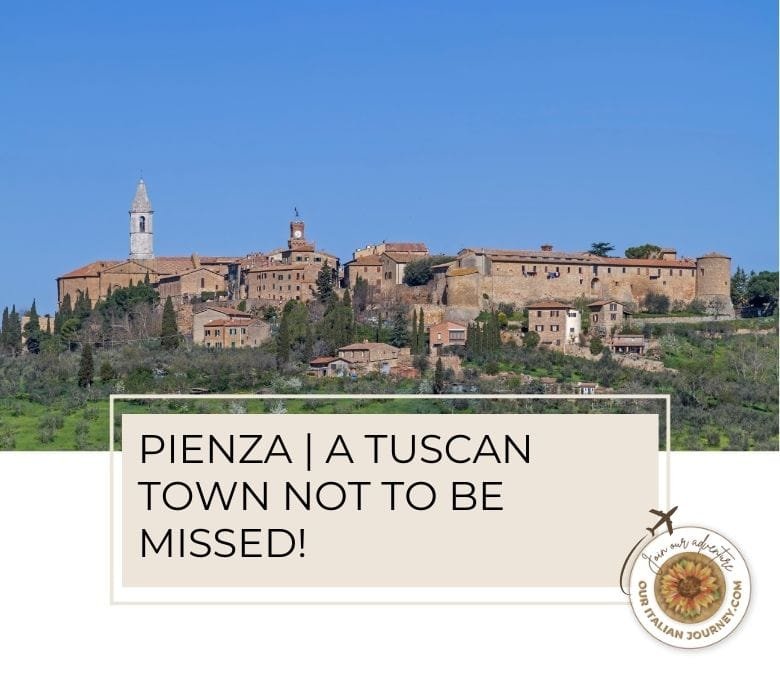
Pienza is a small hill town in the Val d’Orcia, in southern Tuscany, and it’s one of those places that feels almost unreal when you first arrive. Perfectly placed between Montepulciano and Montalcino, Pienza sits in the province of Siena, roughly 50 kilometers away. The setting alone makes it worth the visit. Rolling hills stretch in every direction, lined with cypress trees and golden fields that seem to change color with the light. This is classic Tuscany at its best.
Where Is Pienza Located
Pienza is easy to reach if you’re already exploring Tuscany. We visited on a full-day bus tour from Florence, with Pienza as one of the stops, and it turned out to be one of the highlights of the day. The historic center is small and walkable, which makes it ideal for a short visit, but it also rewards those who linger. You can see the main sights in a few hours, yet it never feels rushed.
A Brief History of Pienza
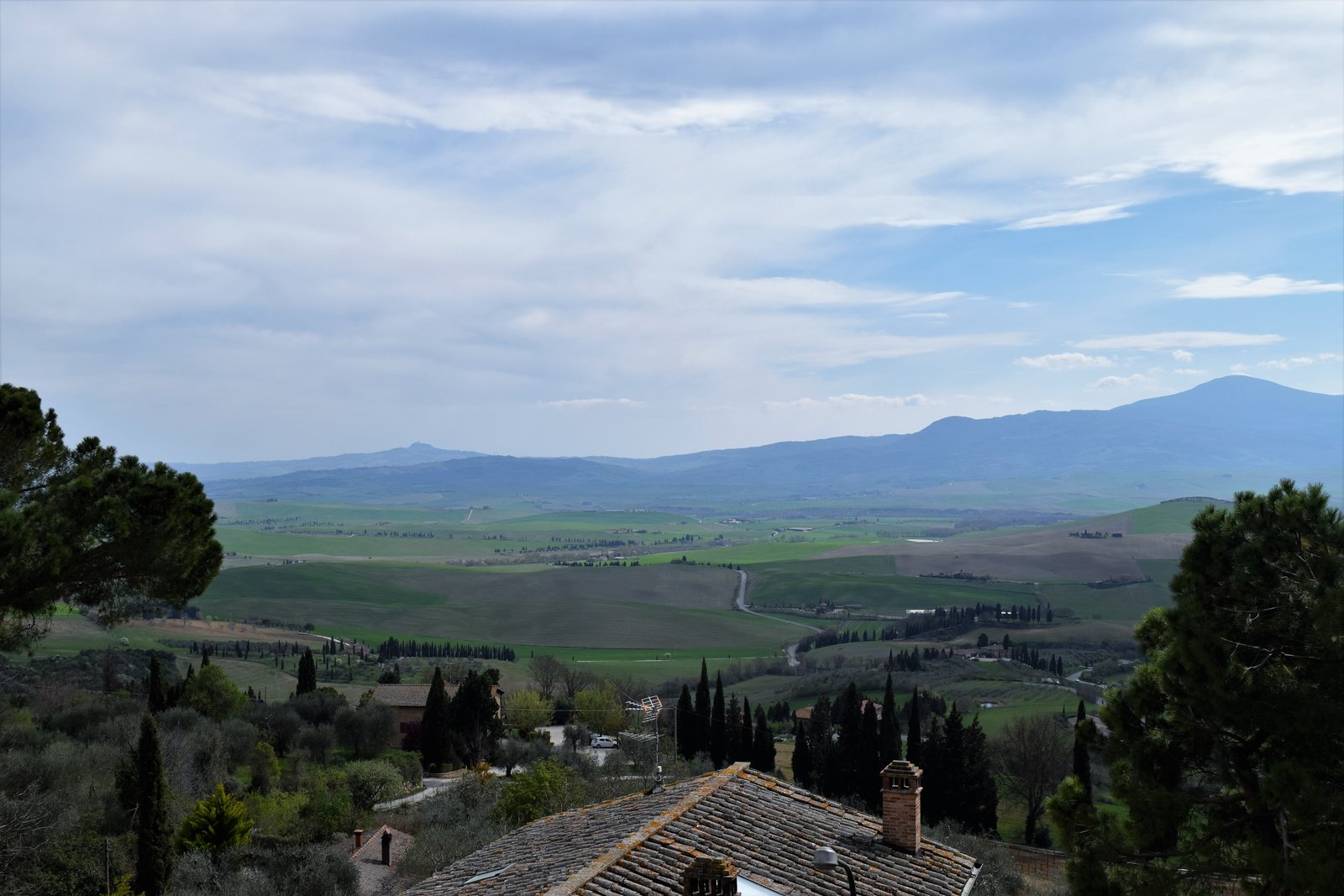
Pienza wasn’t always called Pienza. Its original name was Corsignano, though it’s unclear exactly why the name changed. What is known is that the town underwent a major transformation starting around 1459. Built on a hill, Pienza was redesigned as an ideal Renaissance town, a vision that took about four years to complete. The result is the elegant fifteenth-century layout you see today, with harmonious proportions and carefully planned public spaces.
Walking Through the Town
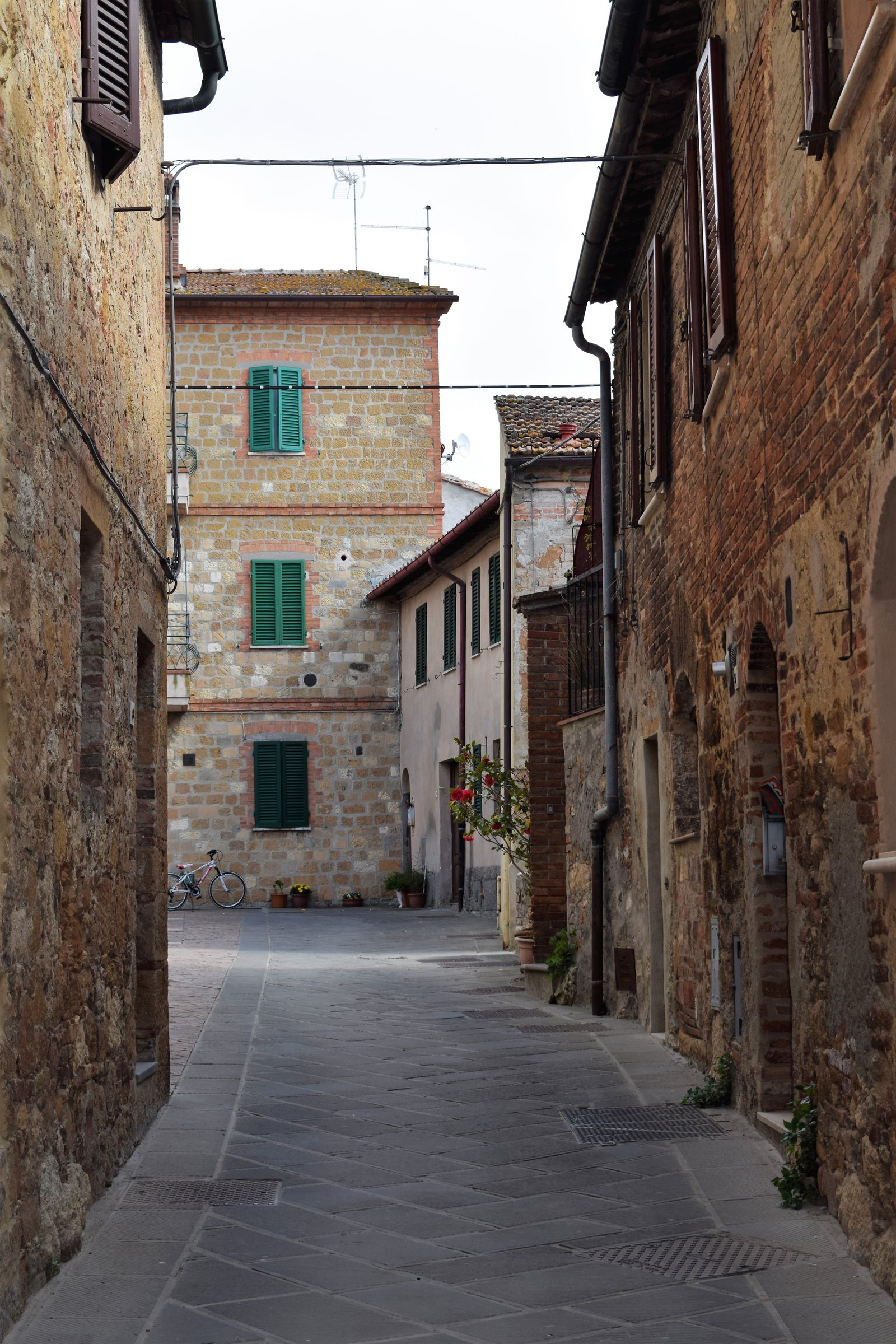
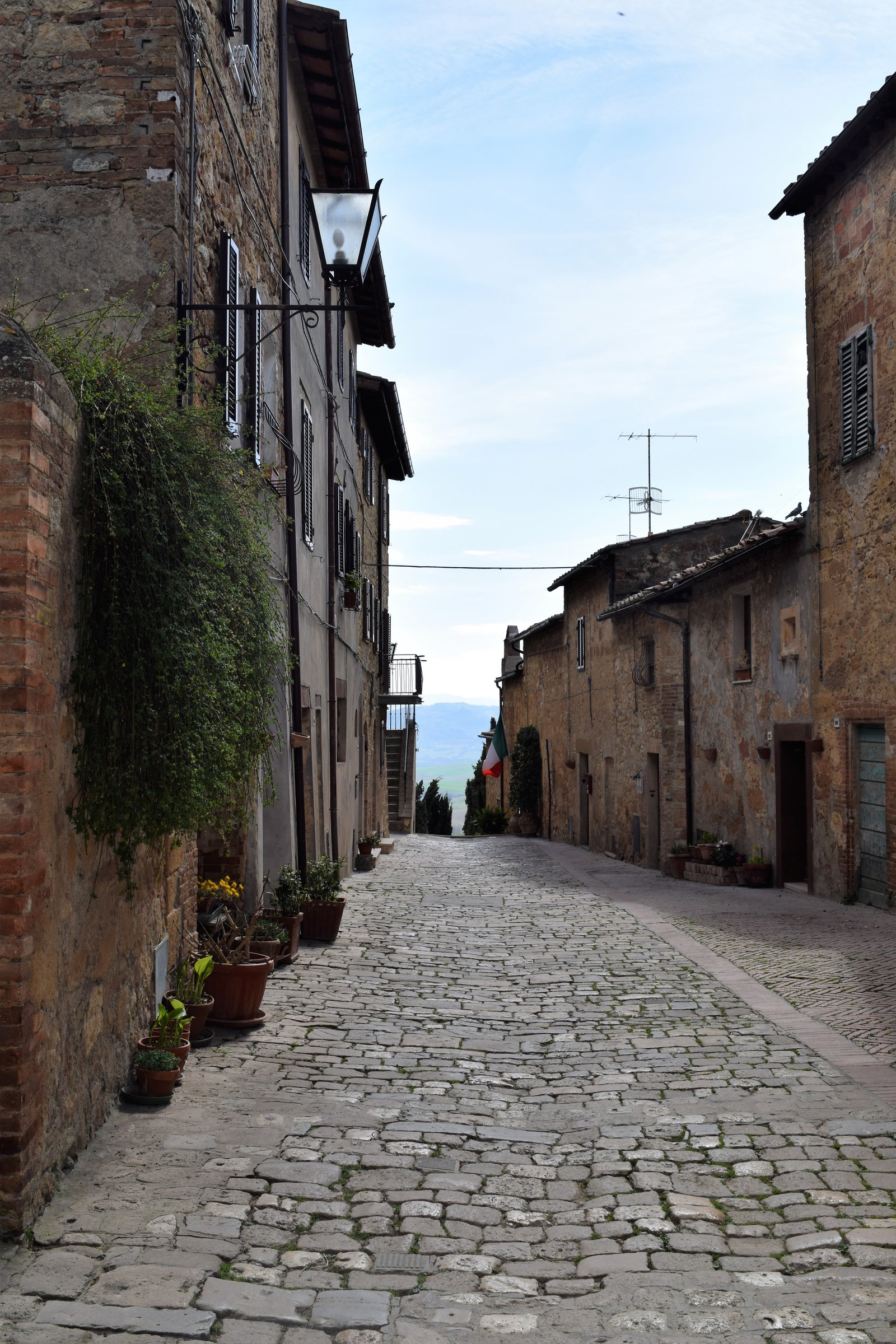
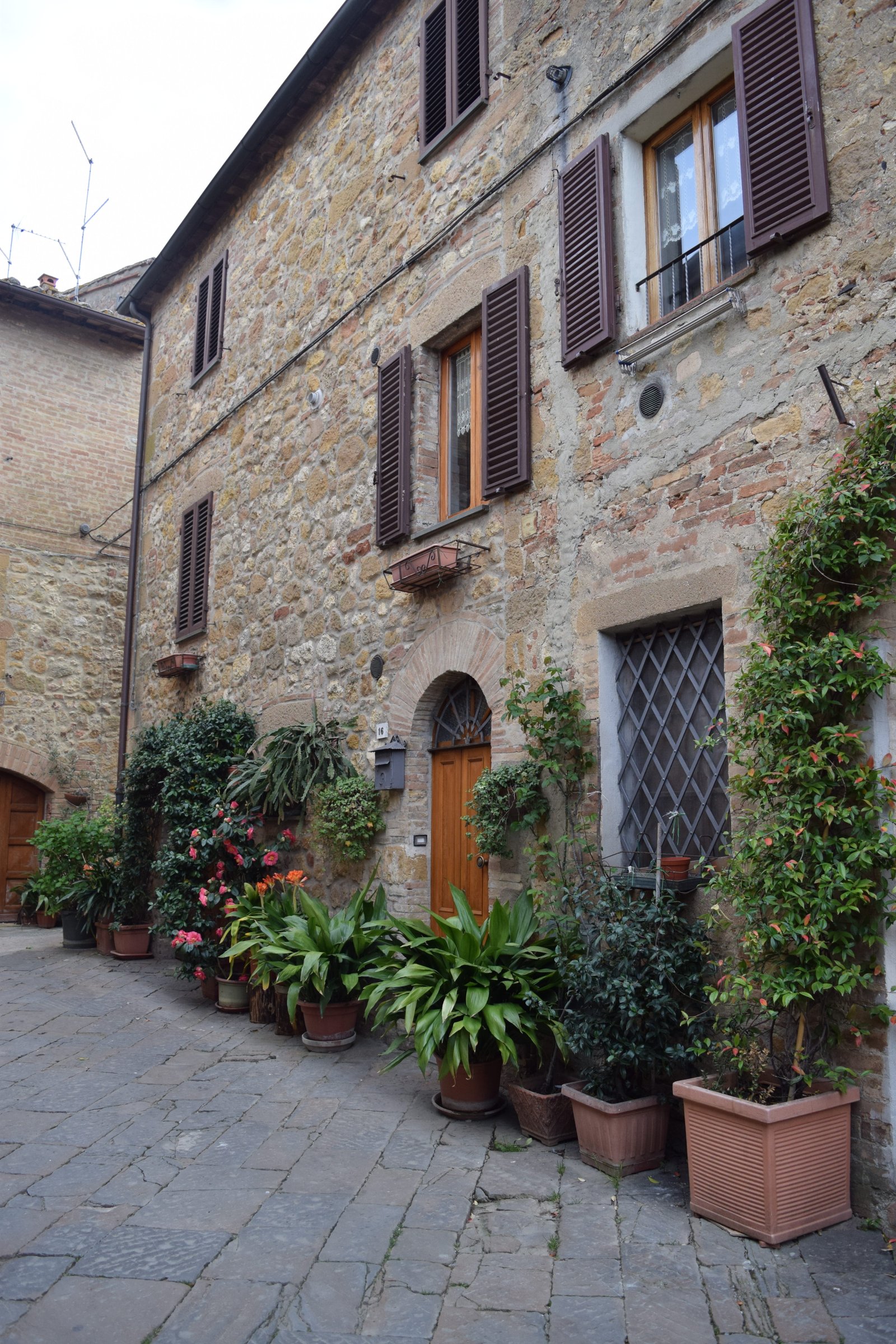
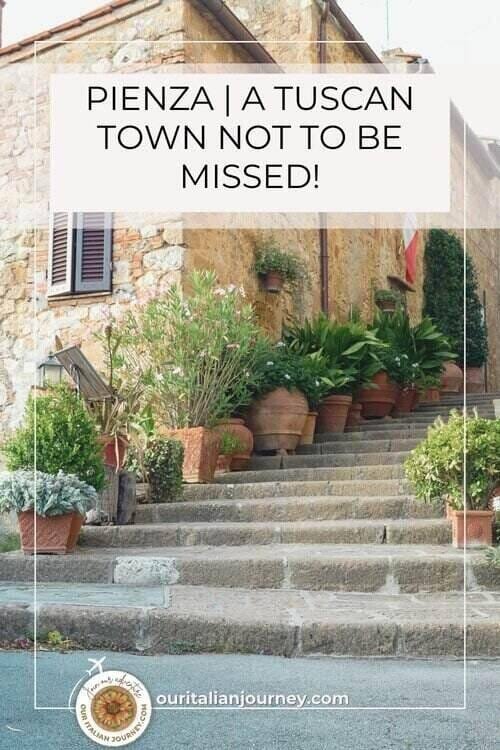
Part of the joy of visiting Pienza is simply walking. Step off the main street and explore the quieter paths along the town walls. This is where you’ll find some of the best views in the Val d’Orcia. These paths are peaceful, scenic, and often overlooked by visitors rushing from shop to shop. It’s the perfect place to slow down and take it all in.
Street Views


Why Pienza Is Famous for Cheese
Pienza is best known for one thing: pecorino cheese. You’ll notice it immediately. Cheese shops line the main streets, and the scent alone is enough to pull you inside. Nearly every shop offers tastings, and that’s part of the fun. We stopped at one shop and ended up sampling several varieties. There were classic aged pecorinos, as well as cheeses infused with wine, olives, mushrooms, and even hot peppers. Our advice is simple: stop, taste, and compare. Pecorino di Pienza is famous for a reason – UNESCO!
UNESCO Recognition
In 1996, UNESCO designated the historic center of Pienza as a World Heritage Site. That recognition highlights the town’s importance as an early example of Renaissance urban planning. In 2004, UNESCO went a step further and added the entire Val d’Orcia to its list of World Cultural Landscapes. When you stand at the edge of town and look out over the countryside, that designation makes perfect sense. The town and the landscape feel inseparable.

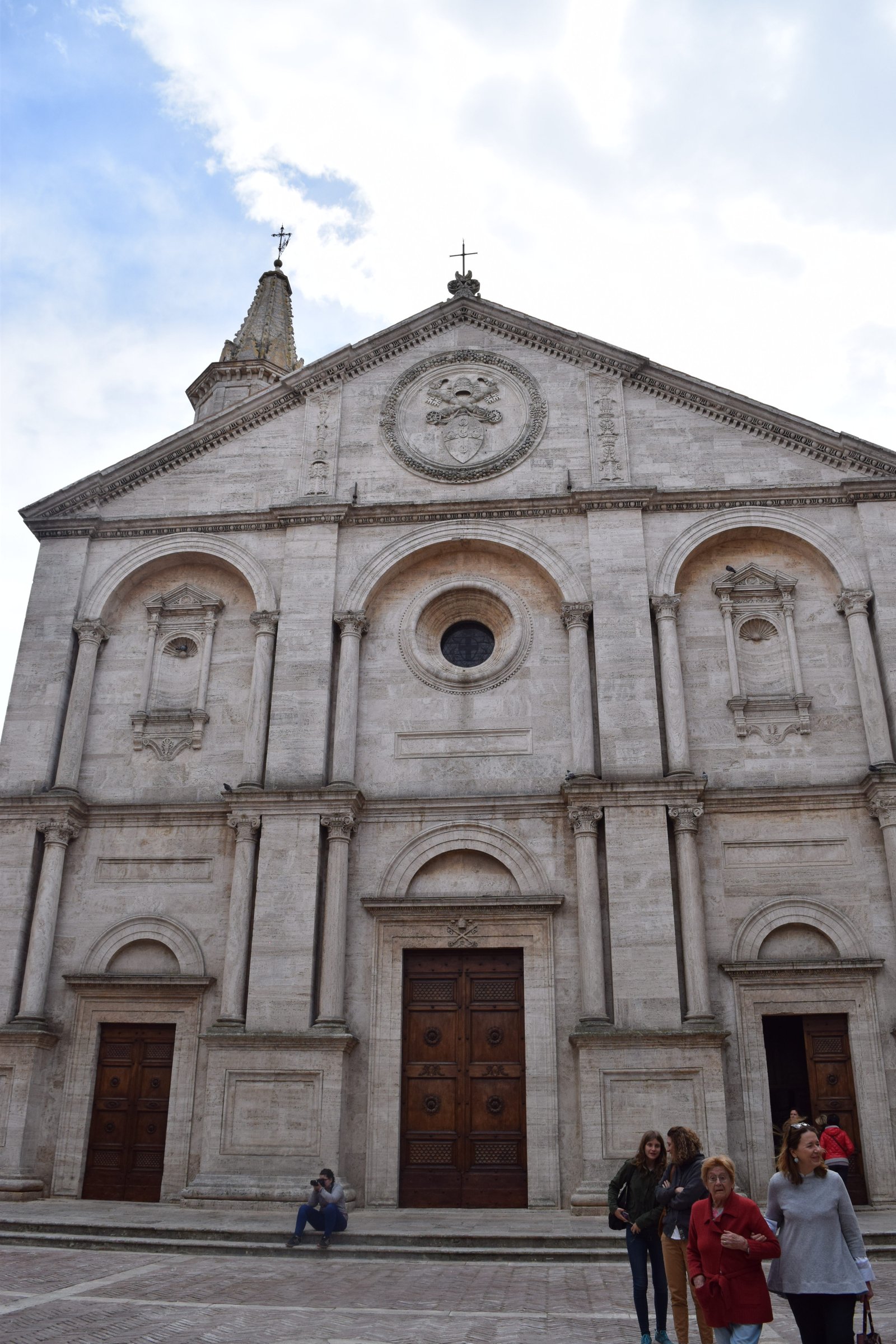
The Duomo
One of the most important sights in Pienza is the Duomo, officially known as the Cattedrale dell’Assunta. Inside, you’ll find fine paintings by well-known artists of the period, but what makes the church especially interesting is its structure. Because the Duomo is built on a hillside, the foundation is constantly monitored. Small glass plates are glued to the walls, and if any of them break, it signals movement in the structure. It’s a simple yet clever system and a reminder of the challenges that come with preserving historic buildings.
Famous Photo
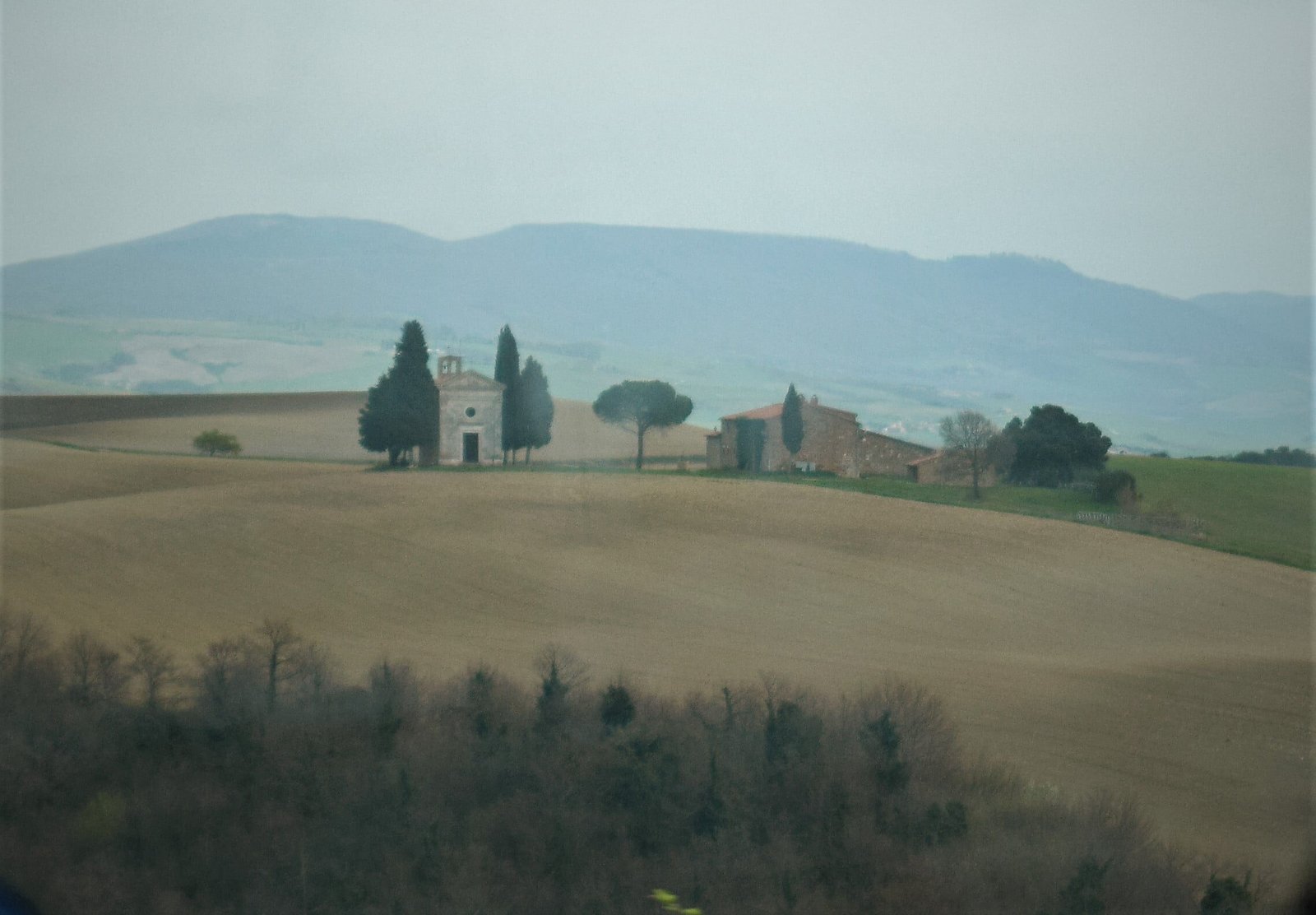
We know you have seen pictures of THE very famous church in the middle of Val d’Orcia. Here is one of ours.
Is Pienza Worth Visiting?
If you’re traveling through Tuscany, Pienza is absolutely worth adding to your itinerary. Whether you come for the cheese, the history, or the views, it delivers on all fronts. Even a short visit feels meaningful, and it’s the kind of place that stays with you long after you leave. If you’re anywhere near the Val d’Orcia, make Pienza a stop. You won’t regret it.
Editor’s Note: This post was initially published in March 2019 and was recently updated in December 2026 for accuracy and additional information.



Hello friends! We are in Pienza this very moment! It is beautiful as you say. I love that it is mostly flat, and the views are spectacular. If it were more convenient without a car, it would be on our list of retirement cities.
Well… isn’t that convenient! Awesome that you like it as much as we do! I completly agree with your thoughts! Thanks for commenting Tom!
Pienza was one of our first loves in Italy within the gorgeous Val D’Orcia! Agriturismo Cretaiole was the first place we stayed in this area; what a joy!! HIGHLY recommend anyone coming to this area to stay at this wonderful place! They also have several other properties in the area as well! Isa and Carlo are part of the family who created this experience and Ssoo much more! Their family is so warm and welcoming you feel like you’re at a relatives house! Pienza will always have a special place in our hearts!❤️🇮🇹
I love your comment Patricia! This type of comment is exactly what other readers/subscribers need to know. I so appreciate you sharing!
We briefly visited Pienza in 2022. It is a lovely town and deserves more time than we had there. We are overdue to plan a return to Italy.
We need to return too, Jackie. Thanks so much for commenting!!