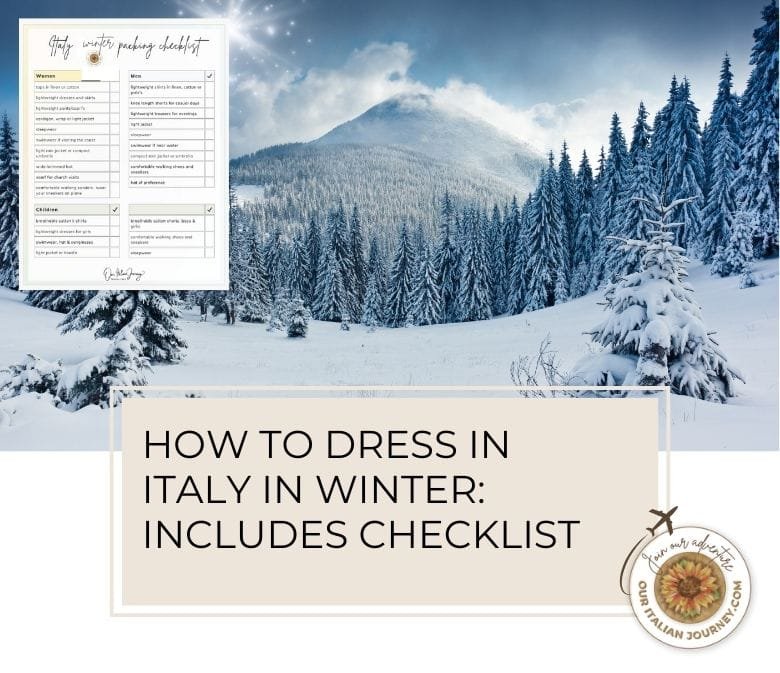
How to dress in Italy in winter is a question many travelers ask because Italy’s climate varies from north to south. Northern cities like Milan, Venice, and Turin can be icy and damp. In contrast, central cities such as Rome and Florence are cooler but more moderate, and southern regions like Naples or Sicily stay mild but require layers in the evenings. Dressing warmly and stylishly ensures you enjoy Italy’s festive winter season comfortably, whether strolling through Christmas markets, exploring historic streets, or enjoying wintertime cuisine.
Stay tuned for similar upcoming posts covering the individual seasons. You can view our general post on all the seasons here.
This post contains affiliate links that help keep this website running. By purchasing through our links, we make a small commission at no extra charge to you. Thank you for your support!
- Italy in Winter: What to Expect
- Cultural Dress Codes & Style Tips
- Fabrics & Footwear
- Regional Clothing Notes
- Women’s Winter Packing List (and what not to bring)
- Men’s Winter Packing List (and what not to bring)
- Children’s Winter Packing List (and what not to bring)
- Common Winter Packing Mistakes
- Final Thoughts…
Italy in Winter: What to Expect
December through February brings the coldest temperatures of the year. Northern Italy frequently drops below freezing and can see snow in cities like Milan, Bolzano, and Turin. Venice, with its damp canals, often feels colder than the thermometer suggests. Central Italy hovers around 40–55°F (5–13°C), while southern Italy is milder during the day but still cool at night. Rain is common across the country, particularly in January, and early February can bring a mix of sun and wet weather. Shorter daylight hours mean planning your sightseeing with warmth in mind is key.
Cultural Dress Codes & Style Tips
Italians dress warmly but maintain a sense of refinement. Wool coats, scarves, gloves, and hats are standard, even for casual outings. Boots, structured jackets, and subtle layering signal that you are attentive to style. Church visits still require modest attire—covering shoulders and knees—so layering with sweaters and cardigans is practical. In cities like Milan, casual athletic shoes are rare; Italians favor leather shoes or stylish sneakers for comfort and appearance.
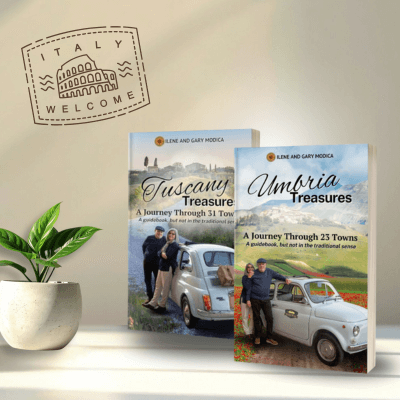
Travel Guidebooks
These are not your typical guidebooks. We include festivals for each town and tons more information!
Fabrics & Footwear
Winter fabrics should be warm and insulating. Wool, cashmere, thick cotton blends, and knitwear are ideal. A medium- to heavy-weight coat is essential, especially in the north. Closed footwear is non-negotiable: leather boots or waterproof options handle snow, ice, and wet streets. In southern cities, lighter leather shoes or sneakers are acceptable, but all sandals should stay home. Socks in wool or cotton blends are essential to keep your feet warm during extended walking tours.
Regional Clothing Notes
- Northern Italy: Snow, damp streets, and icy temperatures make warm coats, scarves, and gloves mandatory. Waterproof footwear is essential in Venice and Milan.
- Central Italy: Florence, Rome, and Siena are chilly but manageable with a wool coat and scarf. Rain is possible, so an umbrella or waterproof jacket is recommended.
- Southern Italy: Naples, Sicily, and the Amalfi Coast are mild during the day but cool at night. Layering is key, and evenings still require jackets and scarves.
Women’s Winter Packing List (and what not to bring)
- Wool or puffer coat for cold days
- Sweaters, long-sleeve tops, and cardigans
- Jeans, trousers, or dresses with tights
- Boots suitable for walking on cobblestones
- Scarf, gloves, and hat
❌ Don’t pack flimsy shoes, summer dresses, or lightweight jackets—they won’t protect against winter cold.
Men’s Winter Packing List (and what not to bring)
- Wool coat or warm jacket
- Sweaters and button-down shirts
- Jeans or chinos with warm socks
- Boots for walking; leather sneakers for southern regions
❌ Avoid shorts, light jackets, or flip-flops—they’re not practical.
Children’s Winter Packing List (and what not to bring)
- Warm coats, sweaters, gloves, and hats
- Waterproof boots if traveling north
- Layered clothing for indoor and outdoor activities
❌ Skip lightweight or summer clothing; children will need warmth for all outdoor sightseeing.
Common Winter Packing Mistakes
A frequent mistake is underestimating the damp, cold air, especially in Venice or Milan. Another is bringing ski jackets for city touring—they are bulky and not typical Italian streetwear. Improper footwear or insufficient layers can make walking tours uncomfortable or even unsafe on slick streets.
Final Thoughts…
Winter in Italy is magical, with festive lights, quieter attractions, and seasonal foods. By packing thoughtful layers, warm footwear, and practical accessories like scarves and gloves, you’ll stay comfortable while enjoying Italy’s winter charm. With proper preparation, winter can be one of the most rewarding seasons to explore Italy.
For even more tips on what to expect in every season, including how weather can shape your travel experience, see the “Seasons in Italy” chapter in Tuscany Treasures and Umbria Treasures. It’s a great companion if you’re planning ahead for future trips or want to understand Italy’s rhythms year-round.
And if you’d like this checklist in a handy, printable format, we’ve put together a free PDF you can save on your phone or print before you go. If you have additional suggestions, please let me know and I can add it to the list!